Festive Christmas Cookie in a Glass Embroidery Design Review
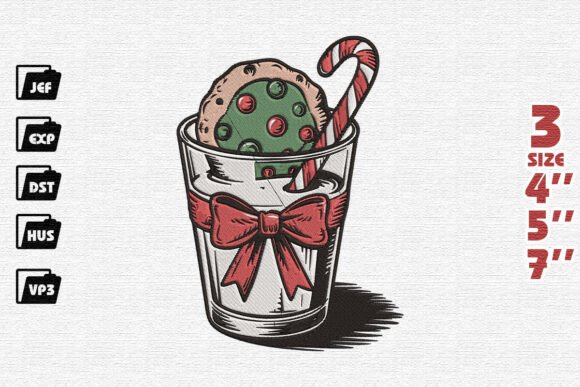
As someone who has spent years navigating the delicate balance between digital files and physical thread, I approach every new machine embroidery design with a critical eye. The holiday season is particularly demanding for crafters and small business owners. We need designs that not only look charming on a screen but translate beautifully onto fabric without causing frustration or wasted materials. Today, I am evaluating the Festive Christmas Cookie in a Glass Embroidery Design. This piece promises a delightful aesthetic featuring a glass tumbler adorned with a large red ribbon bow and filled with sweet treats. But does it hold up under the scrutiny of a professional embroidery project?
First Impressions: Mood and Visual Personality
When I first loaded this embroidery file into my digitizing software, the immediate impression was one of cozy nostalgia. The concept of cookies stacked in a glass jar is a classic holiday trope, and this design captures that warmth effectively. The visual layout suggests a balanced composition where the glass tumbler provides structure, while the red ribbon bow adds a dynamic splash of color and movement. For an Etsy seller or a boutique owner looking to create a cohesive holiday collection, this design offers a strong focal point.
The charm lies in the simplicity of the elements. Unlike overly complex illustrations that can get lost in stitching, this design relies on clear shapes. The "glass" effect is likely achieved through strategic use of satin stitch and perhaps some running stitch outlines to suggest transparency and reflection. The red bow stands out as the hero element, drawing the eye immediately. This kind of visual hierarchy is crucial for a finished product meant to be seen from a distance, such as a wall hanging or a large tote bag.
Real-World Application: From File to Fabric
To truly understand the value of the Festive Christmas Cookie in a Glass Embroidery Design, we must imagine it in action. Picture a high-quality canvas tote bag intended for holiday gift shopping. Placing this design centered on the front creates an instant statement. The sturdy nature of canvas supports the weight of the thread well, allowing the stitch density to build up without puckering the fabric. The red ribbon would pop against the natural beige or white background, making the item highly desirable for customers browsing a craft fair or an online shop.
I also see great potential for this design on custom apparel. Imagine a heavyweight cream-colored sweatshirt. The soft texture of the fleece complements the whimsical nature of the cookie jar. However, when moving to sweatshirt embroidery, you must consider the stretch of the fabric. A proper stabilizer is non-negotiable here. Without it, the tension from the fill stitches could distort the neckline or cause the design to pucker over time. For baby embroidery, perhaps on a onesie or a receiving blanket, the softness of the theme fits perfectly, provided the thread colors are safe and the stitching is smooth enough not to irritate sensitive skin.
For those creating embroidered patches, this design works exceptionally well. The defined edges of the glass and the distinct shape of the bow make it easy to trim around after stitching. These patches could then be sold as standalone items or used to decorate denim jackets, backpacks, or aprons. An apron featuring this design in the center pocket area would be a hit for any home baker looking to add a festive touch to their kitchen gear.
Navigating Challenges: Where Caution is Needed
While the design is versatile, it is not without its challenges. As a reviewer, I must highlight areas where this digital embroidery file might struggle if not handled correctly. First, consider the hoop size. If the design includes the full height of the glass and the bow, it may require a larger hoop than standard 4x4 options. Attempting to fit it into a smaller hoop by scaling it down too much will compromise the clarity of the details, especially the text or small decorative elements inside the glass.
Stitch density is another critical factor. Areas like the red ribbon bow often rely heavily on satin stitch. On textured fabrics like linen or thick wool, dense satin stitching can sink into the weave, losing its sheen and definition. In these cases, using a cutaway stabilizer is essential to lift the threads off the fabric surface. Conversely, on very thin fabrics like chiffon or light cotton, the weight of the design could overwhelm the material, leading to sagging or tearing. Always test the design on scrap fabric first to gauge how the threads interact with your specific material.
Dark fabrics present a unique challenge. The "glass" effect in this design likely relies on lighter thread colors to simulate transparency. Stitching this on a black or navy background might obscure the illusion of the glass, making the design look flat. You may need to adjust the thread colors or add a backing layer of contrasting fill stitch to ensure the design remains visible and vibrant. Additionally, curved surfaces like caps can distort the vertical lines of the glass tumbler. While possible, it requires precise placement and potentially a specialized cap frame to maintain the integrity of the shape.
Practical Notes for Professional Execution
If you are planning to use the Festive Christmas Cookie in a Glass Embroidery Design for commercial purposes, there are several steps you should take before committing to a production run. First, always review the licensing terms. Ensure you have the right to sell finished goods or digital assets if you plan to resell the file itself. Many designers offer personal use licenses that do not cover commercial embroidery.
Create printable mockups to visualize the final result. Seeing the design in black and white can help you identify contrast issues before you even thread your machine. Check the small details closely; tiny letters or intricate patterns inside the cookie stack can become muddy if the stitch count is too high for the available space. Compare the design against both light and dark fabric backgrounds in your software to anticipate how the colors will shift once stitched.
Finally, remember that the success of any handmade product depends on execution. Use the correct needle size for your thread type, ensure your bobbin tension is dialed in, and never skip the step of testing on a swatch. By taking these precautions, you ensure that the Festive Christmas Cookie in a Glass Embroidery Design delivers the professional quality your brand deserves.
Final Verdict for Makers and Entrepreneurs
In conclusion, this design offers a strong foundation for holiday-themed merchandise. Its nostalgic appeal and clear visual structure make it suitable for a wide range of applications, from personalized gifts to small shop products. However, its success hinges on the maker's ability to adapt it to different fabrics and hoop sizes. With careful attention to stabilizers, thread choices, and testing, this embroidery project can become a standout item in your holiday catalog. It is a design that respects the tradition of handmade craftsmanship while offering the modern efficiency needed for today's busy makers.